 Gobekli Tepe Turkey Tours
Harran, Turkey: the Beehive Houses, the Ruins and How to Visit
Harran is an ancient town about 40 to 47 km southeast of Şanlıurfa in southeastern Turkey, known for its conical beehive houses, the ruins of what is described as the oldest mosque in Anatolia and an early Islamic university. This guide covers how the houses are built, what remains of the Grand Mosque, the university and the castle, the history of Carrhae and the Abraham tradition, the ticket situation, the summer heat and the border advice. It also lists which Göbekli Tepe tours in the Göbekli Tepe tours include Harran and what each one costs.
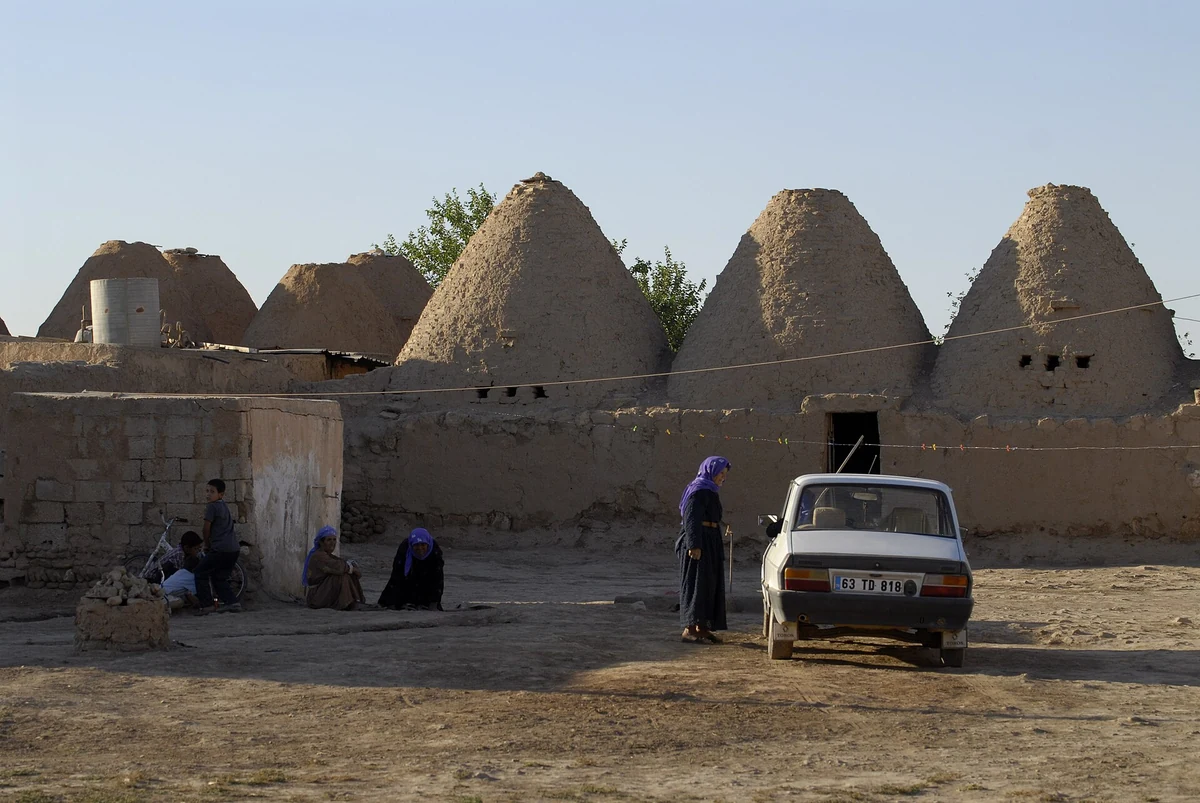
The beehive houses of Harran. Photo: Zhengan, CC BY-SA 4.0, via Wikimedia Commons
Quick answer Harran in brief
Harran lies about 40 km southeast of Şanlıurfa (Wikipedia) or 47 km south by road (Turkeytravelplanner), and about 20 km from the Syrian border crossing at Akçakale. It is famous for its beehive houses, the ruins of a Great Mosque built in 744 to 750 and an early Islamic university. One travel blog reports that the village can be entered without a fee, though no official tariff is stated.
Key takeaways
- See Harran and Göbekli Tepe in one day with the Göbekli Tepe and Harran Day Trip, from $225 per person.
- Prefer an 8 to 9 hour day from Şanlıurfa? The Göbekli Tepe, Harran and Museum Tour costs $174 per person and visits Harran Kültür Evi.
- The beehive houses, the mosque ruins and the castle are explained below in the houses section and the ruins section.
- Check the heat, the ticket and the border advice in Visiting Harran, and compare every listing on the Göbekli Tepe tours homepage.
The Beehive Houses
The conical mud-brick houses are the image most people carry of Harran, and they are the reason many travelers make the drive south from Şanlıurfa.
How They Are Built
Wikipedia says most present-day beehive houses date to the early 20th century. They are built of stone, brick and mud. The thick walls keep the interior cool in a climate where Şanlıurfa's mean daily maximum reaches 39.5 °C in July, and each dome has a ventilation opening at the top.
How Many Are Left
A 2002 count recorded 2,760 beehive houses in Harran. Wikipedia reports that the number in the old town has since fallen to a few dozen. The houses have had conservation protection since 1979, so what survives is protected even as most of the original stock has disappeared.
Harran district as a whole had a population of 96,072 in 2022 over an area of 904 km², so the old town is now a small fragment of a working district.
Can You Go Inside
Yes, through the Harran Culture House, a beehive complex rebuilt for tourism in 1999. It is the stop named in the itinerary of the Göbekli Tepe, Harran and Museum Tour, an 8 to 9 hour day from Şanlıurfa. One travel blog says the village can be entered without a fee and with parking anywhere, though no official tariff for the site as a whole is stated.
The Mosque, the University and the Castle
Beyond the houses, Harran's archaeological remains tell of a major Islamic-era city built on much older layers.
The Grand Mosque
The Great Mosque was built by the Umayyad caliph Marwan II in 744 to 750 and is described as the oldest mosque in Anatolia. At its height it measured 104 by 107 metres. Remaining parts include the eastern wall, the mihrab, a fountain and a minaret 33.3 m tall.
The mosque also carries an older mystery: Harran's moon temple Eḫulḫul existed by about 2000 BC, and the Grand Mosque site has the most scholarly support as its location, though Wikipedia notes the location is unconfirmed.
The University and the Madrasa
Harran's Islamic university is called the first Islamic university, and Wikipedia dates it to 717 under Caliph Umar II. The Harran madrasa was at its height in the 8th century under Harun al-Rashid and was a centre for translating Syriac and Greek works into Arabic. That translation work ties Harran to the preservation of classical learning.
The Castle
Harran Castle is a large brick fortress of unknown date. Greek inscriptions found there suggest a Byzantine origin, and Turkeytravelplanner dates the kale at least to Fatimid times in the 11th century. The site has been partially excavated and reconstructed with support from the Ministry of Culture and Tourism.
The mound beneath the town was in use from the 3rd century BC to the 13th century AD, and ceramics dating to about 5000 BC have been found on it. The ruins were placed on Turkey's UNESCO Tentative List in 2000.
Harran Beehive Houses: Homes Attract Tourists and Preserve Tradition
A look inside the beehive houses and the people who keep them. Third-party video by TRT World. This site did not shoot it and has no relationship with the creator.
Carrhae and Abraham
Harran appears in Roman history and in the Book of Genesis under the same name, which gives the site a double fame.
From Merchant Outpost to Assyrian Capital
Wikipedia says Harran was likely founded around 2500 to 2000 BC, possibly as a merchant outpost of traders from the city of Ur. The town briefly served as the last capital of the Neo-Assyrian Empire from 612 to 609 BC, after the fall of Nineveh. The moon god Sin was the city's deity, and emperor Caracalla was murdered in 217 while visiting the temple of Sin.
The emperor Julian consulted the temple's oracles in 363.
The Battle of Carrhae
In 53 BC Harran, then known to the Romans as Carrhae, was the site of a Roman defeat. Parthian forces under the general Surena defeated and killed the Roman triumvir Marcus Licinius Crassus at the Battle of Carrhae.
Abraham in the Book of Genesis
Genesis names Harran as the place where Abraham and his family stopped on the way from Ur to Canaan. This is a scriptural tradition rather than an archaeological finding, and it is presented as such. The same Abraham story runs through Şanlıurfa itself, where the Mevlid-i Halil Cave and Balıklıgöl are tied to his birth and later life.
You can read about that side in the Şanlıurfa guide. Tours such as the Göbekli Tepe World's First Temple Tour combine Prophet Abraham's Cave in Urfa with Harran in a single day.
Visiting Harran
Harran is easy to reach from Şanlıurfa, but the heat is serious and the site lies about 20 km from the Syrian border crossing at Akçakale. Here are the practical facts.
Distance and Getting There
Wikipedia puts Harran about 40 km southeast of Urfa, while Turkeytravelplanner puts it 47 km south of Şanlıurfa, so say about 44 to 47 km by road. Turkeytravelplanner reports hourly minibuses to Harran from Şanlıurfa in the daytime. Minibuses to Akçakale stop at the Harran road junction, which would leave a 10 km walk, so take the direct Harran service or drive.
One blog describes driving route 99 south for 30 km, then following a sign to Harran (Altınbaşak) for another 8 km.
Ticket and Entry
One travel blog reports that the Harran village can be entered without a fee. No official combined ticket for the mosque ruins, the castle and the mound is stated. The Ministry tariff that sets a euro price for foreigners at sites such as Göbekli Tepe applies from 1 April and should not be read as a Harran price today.
For the wider region, see the Göbekli Tepe tickets page for what the sites near Şanlıurfa charge.
The Heat
Harran has a hot, dry climate with annual precipitation rarely above 40 cm, and it sits at 360 m elevation. Şanlıurfa's mean daily maximum reaches 39.5 °C in July and 39.0 °C in August, and Şanlıurfa's record high is 46.8 °C. Ceylanpınar in Şanlıurfa province recorded 47.7 °C in a July heatwave. One travel guide says summer temperatures at Göbekli Tepe regularly soar above 40°C (104°F) and recommends spring from March to May and autumn from September to November.
Go early in the day and carry water.
The Border and the Travel Advice
Harran is about 20 km from the Syrian border crossing at Akçakale, or 25 km according to Turkeytravelplanner. The Foreign Office advice quoted from the FCDO reads: 'FCDO advises against all travel to within 10km of the border with Syria due to fighting and a heightened risk of terrorism.' FCDO also says in-person consular support is severely limited in areas where it advises against travel. Check the current FCDO map for Harran and the seasons, heat and safety section before you go.
Tours That Include Harran
Several listings in the catalog include Harran among their sites. Three are day tours from Şanlıurfa, one is a two-day trip from Istanbul with flights and a hotel night, and three are multi-day routes. The prices below are the US dollar card prices for each tour, quoted per person, and what they include and leave out is stated on each tour page.
For the full catalog with ratings, see the comparison table on the homepage.
How the Listings Compare
The table compares the catalog tours that list Harran among their sites, with the US dollar card price per person from each listing and the city where the tour starts. The cheapest day option is $174 from Şanlıurfa and the cheapest multi-day listing is $863.65 from Cappadocia, with no flights. The $225 is the Şanlıurfa day only, with the Istanbul flights in the Full Package option, and the $1,259 depends on the option chosen.
| Tour | Price | Starts in |
|---|---|---|
| Göbekli Tepe, Harran and Museum Tour | $174 | Şanlıurfa |
| Göbekli Tepe and Harran Day Trip | $225 | Şanlıurfa, Istanbul with the Full Package |
| Göbekli Tepe World's First Temple Tour | $495 | Şanlıurfa |
| Göbekli Tepe 2-Day Private Tour with Flights | $1,659.11 | Istanbul hotel |
| Göbekli Tepe and Mount Nemrut 3 Days | $1,800 | Şanlıurfa |
| Göbekli Tepe and Nemrut from Cappadocia | $863.65 | Cappadocia |
| Eastern Turkey 8-Day Tour | $1,259 | Gaziantep |
Sources: Wikipedia, Turkeytravelplanner, FCDO
Harran FAQ
What is Harran now?
Harran is a working district in Şanlıurfa province with a population of 96,072 in 2022, an archaeological site and a small village of beehive houses visited on day trips from the city. See Visiting Harran for the practical details.
Is it Haran or Harran?
English Bible translations usually write Haran for the place named in Genesis, while the modern Turkish town is spelled Harran with two r's. This page uses Harran throughout, as does the Şanlıurfa guide.
How far is Harran from Şanlıurfa?
Wikipedia says about 40 km southeast and Turkeytravelplanner says 47 km south, so about 44 to 47 km by road, with an hourly daytime minibus service reported. It pairs easily with Göbekli Tepe on the Göbekli Tepe and Harran Day Trip.
Why are the houses in Harran beehive shaped?
The domes are built of stone, brick and mud with thick walls and a ventilation opening at the top, which keeps the interior cool in a climate where July averages a daily maximum of 39.5 °C. Most surviving houses date to the early 20th century. The shape and the count are covered in The Beehive Houses.
Was the first Islamic university in Harran?
Harran's Islamic university is called the first Islamic university and Wikipedia dates it to 717 under Caliph Umar II, with the madrasa at its height in the 8th century as a centre for translating Syriac and Greek works into Arabic. The mosque remains are described in the ruins section.
Can you visit Harran safely given the border?
Harran is about 20 to 25 km from the Akçakale crossing, and the FCDO advises against all travel to within 10 km of the border with Syria, so check the current FCDO map for Harran. Read the exact quoted advice in Visiting Harran before booking.