 Gobekli Tepe Turkey Tours
Karahan Tepe: Göbekli Tepe's Sister Site in the Taş Tepeler
Karahan Tepe is a Pre-Pottery Neolithic site in Şanlıurfa Province, and the closest thing to a sister site that Gobekli Tepe Turkey tours has. It sits about 46 km from Şanlıurfa city centre in the Tek Tek Mountains National Park, and it carries carved pillars, a chamber cut into bedrock and a 2.3 to 2.45 m human statue from roughly the same era as Göbekli Tepe, around 9500 to 10,000 BC. This page covers what has been found there, the wider Taş Tepeler project, the joint ticket and the tours that include Karahan Tepe in the price. If you want the full story of the older site itself, that belongs to the Göbekli Tepe history page.
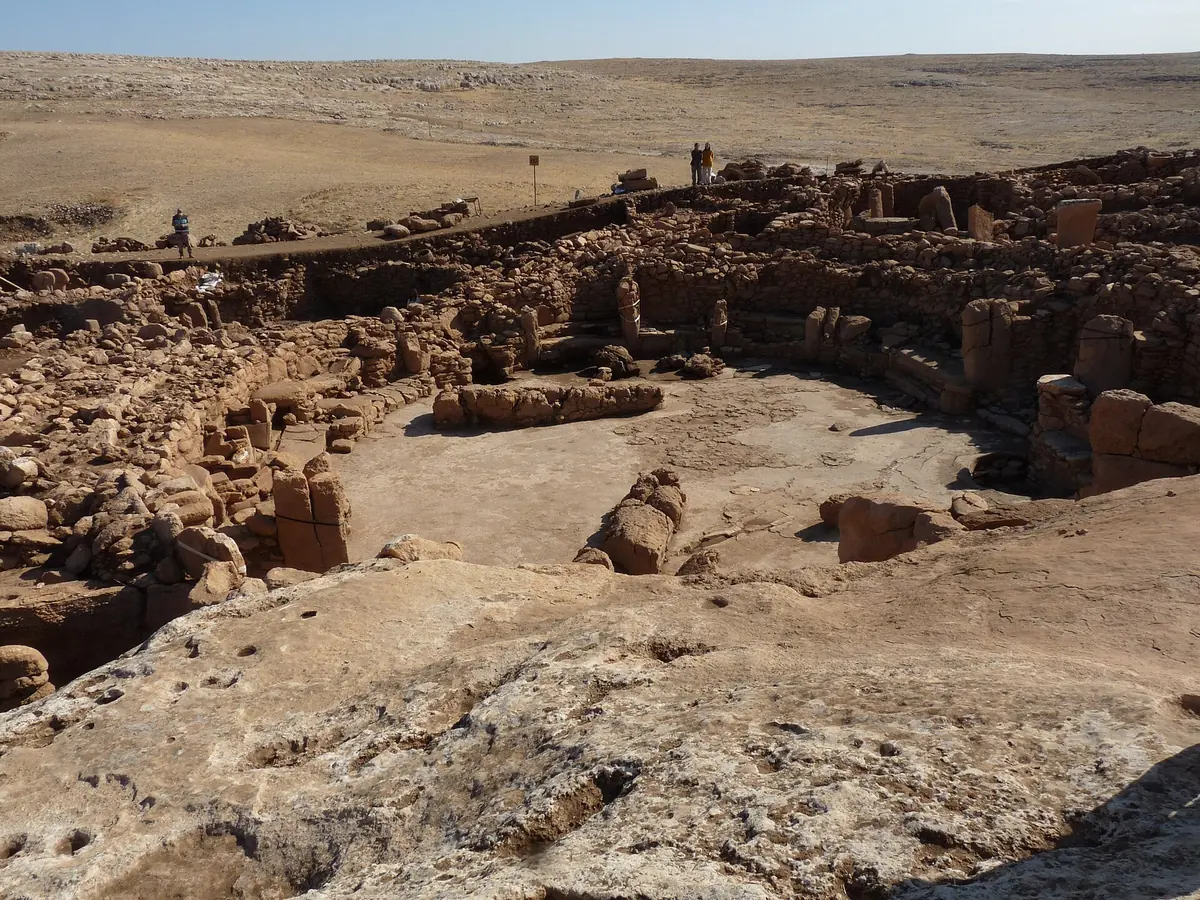
The rock-cut chambers of Karahan Tepe. Photo: Frantisek Trampota, public domain, via Wikimedia Commons
Quick answer Karahan Tepe at a glance
Karahan Tepe is a Neolithic site about 46 km from Şanlıurfa city centre, dated to roughly 9750 to 9400 BC by Wikipedia, which makes it the same era as or slightly older than Göbekli Tepe. Excavations began in 2019 and about 5% of the site had been dug as of 2023. It is part of the Taş Tepeler project and is visited on a joint Göbekli Tepe and Karahan Tepe ticket.
Key takeaways
- See both sites in one day: Göbekli Tepe and Karahan Tepe from Istanbul includes the return flights and entrance fees for $900 per person.
- Based in the city? Göbekli Tepe, Karahan Tepe and Balıklıgöl starts in Şanlıurfa from $145 per person.
- For the full picture of the older site, read the Göbekli Tepe history page.
- Practical costs, tickets and flights sit in the homepage section on what a tour costs and the site ticket.
What Is at Karahan Tepe
Karahan Tepe sits on a hill locally called Keçilitepe, near the village of Yağmurlu inside the Tek Tek Mountains National Park. It is one of the most important Neolithic finds in Türkiye, and it is still mostly underground.
How Old Is Karahan Tepe
Wikipedia dates Karahan Tepe to about 9750 BC (built) to about 9400 BC (abandoned), within the Pre-Pottery Neolithic A and B. Hürriyet Daily News has published wider ranges, from 10,000 to 6,000 BC, and goturkiye uses the 9th millennium BC. The safe reading is around 9500 to 10,000 BC, which puts it in the same era as Göbekli Tepe or slightly earlier. The Taş Tepeler project as a whole describes its subject period as roughly the 10th to 7th millennium BC.
Diet at Karahan Tepe was mainly gazelles and legumes, according to Wikipedia.
The Discovery and the Dig
The sources disagree on the start. Wikipedia credits Bahattin Çelik of Harran University with discovering the site in 1997. Hürriyet Daily News says it was identified in 2017 surveys, with excavation beginning in 2019.
The Şanlıurfa municipality confirms systematic excavations began in 2019, so the 2019 dig start is solid whichever discovery date you take. Klaus Schmidt led Göbekli Tepe until his death in 2014. The Karahan Tepe dig is associated with Necmi Karul.
Only about 5% of the surface had been excavated as of 2023. The site covers almost 10 hectares, plus about 5 hectares of T-pillar quarries, and more than 266 T-shaped pillars had been observed there as of 2000.
The Pillar Room and the Carved Head
The building called AB Structure is carved directly into bedrock and measures 8 by 6 m. The Şanlıurfa municipality counts four phallus-shaped obelisks in its front row and six in the back row, while Archaeology magazine reported 11 pillars and a human-head carving in the same building in a 2021 announcement by Necmi Karul's team. The counting likely differs on whether the carved head is counted as a pillar.
Karul reported the structure as about 11,000 years old and connected to three other structures. Wikipedia notes the site was partly preserved by being filled with dirt and rubble, which protected columns and carvings including a large human face. Four bedrock-carved buildings are labelled AA to AD, and AA has a seating bench with snake and fox depictions.
The Karahan Tepe Statue
The most famous Karahan Tepe statue was found in 2023. Wikipedia and Archaeology magazine give its height as 2.3 m, while the Ministry of Culture and Tourism's 2023 release says 2.45 m, so quote it as about 2.3 to 2.45 m. The figure is a naked man gripping his phallus with both hands, with a V-shaped collar and deep incised lines on the fingers and ribs.
The Ministry describes a seated male fixed to a bench, with emphasised rib, spine and shoulder bones and a vulture sculpture on the front of the bench. A separate vulture statue was found alongside. Nomadic Niko also describes a pit with 10 phallic obelisks and an 11th representing a snake.
In 2025 Minister Mehmet Nuri Ersoy announced a T-shaped pillar with a carved human face, dated by Archaeology magazine to some 12,000 years ago, and called the first known Neolithic self-depiction on a T-shaped column.
Protection and the Visitor Centre
A roof canopy covers approximately 5,000 square metres at Karahan Tepe as part of the 'Legacy for the Future' project. A 2026 Dünya report lists the excavation and research house at 2,000 m², a finds depot of 150 m² and a water tank of 35 m², and says the visitor reception centre was planned to enter service within 2026. A Nomadic Niko visit found the visitor centre not operating, so check its status before you go.
Hürriyet Daily News reported a 'systematic tour route', walking paths and information panels for the opening year.
Sources: Wikipedia: Karahan Tepe, Şanlıurfa municipality, goturkiye press release
The Taş Tepeler Sites
Taş Tepeler, the Stone Hills, is the Şanlıurfa Neolithic Research Project, coordinated under the Ministry of Culture and Tourism with Turkish Airlines as main sponsor. Its aim is an inventory of settlements, camps and hunting grounds from roughly the 10th to 7th millennium BC, with coordinated excavation across the region. Wikipedia dates the sites to the Pre-Pottery Neolithic, c. 10,000 to 7000 BCE.
The Sites in the Project
The project's own site lists nine locations: Sayburç, Göbekli Tepe, Karahan Tepe, Sefertepe, Çakmaktepe, Gürcütepe, Harbetsuvan, Yenimahalle and Söğüt Tarlası. Wikipedia's article counts Göbekli Tepe plus at least eleven others and adds names such as Nevalı Çori, Hamzan Tepe, Taşlı Tepe, Kurt Tepe, Sayburç, Ayanlar Höyük and Çakmaktepe. The Ministry's 2023 release listed 12 sites with research ongoing at nine of them.
The table below compares the ones the sources describe, with the open-to-visitors column reflecting what the facts state.
Comparison of the Taş Tepeler Sites
Open status varies a lot between the sites. Only Göbekli Tepe and Karahan Tepe have established visitor infrastructure in the sources. The others are research locations without a stated visitor route, so treat them as names to watch rather than stops to plan.
| Site | What it is | Open to visitors |
|---|---|---|
| Göbekli Tepe | The best known site, built c. 9500 BCE and abandoned c. 8000 BCE, with T-shaped pillars in circular enclosures | Yes, with a ticket and a visitor route |
| Karahan Tepe | Sister site about 46 km from Şanlıurfa, with the bedrock-carved AB Structure and the 2.3 to 2.45 m statue | Yes per Nomadic Niko, on the joint ticket, visitor centre status changing |
| Sayburç | Village site with a 3.7 m relief of five figures, dated to the 9th millennium BC and published as the earliest known narrative scene | not stated |
| Nevalı Çori | PPNB site of 8400 to 8100 BC on the Euphrates, rescue-excavated 1983 to 1991 and since flooded by the Atatürk Dam | No, submerged |
| Sefertepe, Çakmaktepe, Gürcütepe, Harbetsuvan, Yenimahalle, Söğüt Tarlası | Further Taş Tepeler research sites named by the project | not stated |
Sayburç and Nevalı Çori in Brief
Sayburç is worth knowing because of its relief. It is 3.7 m long, carved into bench backrests in a communal building, and shows five figures: a seated central figure in high relief flanked by leopards, and a squatting figure holding a snake or rattle facing a bull. Eylem Özdoğan published it in Antiquity as the earliest known narrative scene, and a replica is exhibited at the James Simon Gallery in Berlin.
Nevalı Çori was rescue-excavated from 1983 to 1991 by Heidelberg University under Harald Hauptmann, had two free-standing 3 m pillars in its cult complex, and produced a limestone head now held in the Şanlıurfa Museum, where you can also see the original Nevalı Çori Temple. The reservoir now covers the site.
Sources: tastepeler.org, Wikipedia: Taş Tepeler, Sayburç on Wikipedia
The World's First Village Ever: Karahan Tepe
A short report from the dig at Karahan Tepe. Third-party video by TRT World. This site did not shoot it and has no relationship with the creator.
Visiting Karahan Tepe
Karahan Tepe is a working excavation that has opened to tourism, so the practical details matter more than at a finished site. Here is what the sources say about getting there, paying and what you will find on the ground.
Where It Is and How Far
Karahan Tepe sits at 37°05′33″N 39°18′13″E near Yağmurlu, within the Tek Tek Mountains National Park near the Kargalı neighbourhood. Hürriyet Daily News puts it 46 km from Şanlıurfa city centre. Wikipedia calls it roughly 46 km east of Göbekli Tepe, with a 2019 quote saying around 60 km, and My Turkey Adventure says about 35 km from Göbekli Tepe.
The site-to-site figure depends on road versus straight line, so treat it as roughly 35 to 60 km and plan around the 46 km distance from Şanlıurfa, which both Hürriyet and Wikipedia give.
Getting There on Your Own
Per Nomadic Niko, Karahan Tepe requires your own vehicle or a taxi or private driver from Urfa, because there is no stated public transport to the site. Agree the fare with the driver before setting off. The drive from Şanlıurfa is the sort of trip that fits well with the advice on the Şanlıurfa guide, where you will find the city base for both sites.
The Joint Ticket and Prices
The Ministry's tariff list prices 'Göbekli Tepe ve Karahan Tepe Örenyeri (Taş Tepeler)' at a joint 22 euro for foreign visitors, valid from 1 April, with MüzeKart accepted. Until then, secondary sources differ: Karekod lists Göbekli Tepe at 20 euro for foreigners and a combined Göbekli Tepe and Karahan Tepe and Visualisation Centre ticket at 21 euro, Backpack Moments says 21 EUR for 2026, and Nomadic Niko reported paying 3 euro at Karahan Tepe or entering free with a valid Göbekli Tepe ticket. A fair reading is about 20 to 22 EUR for foreigners covering both sites, and you should check muze.gov.tr before travel.
The Ministry footnote says foreign-visitor prices include the audio guide where the service exists. Note that MüzeKart is valid only for Turkish citizens, so it is not a foreigner pass.
What to Expect on the Ground
You will see bedrock-carved buildings rather than rebuilt walls. The AB Structure is the centrepiece, with its rows of phallic obelisks and the carved human head, and the large carved face that filling with rubble preserved. The site is shaded by a canopy of roughly 5,000 square metres, which helps in a province where summer heat is severe and you should read the current travel advice for the province before you go.
Walking paths and information panels were reported by Hürriyet Daily News for the opening. Expect a smaller visitor setup than Göbekli Tepe: the reception centre was still being completed as of the Dünya report, and one visitor found it closed.
Sources: Hürriyet Daily News, Nomadic Niko, Ministry tariff via alomaliye
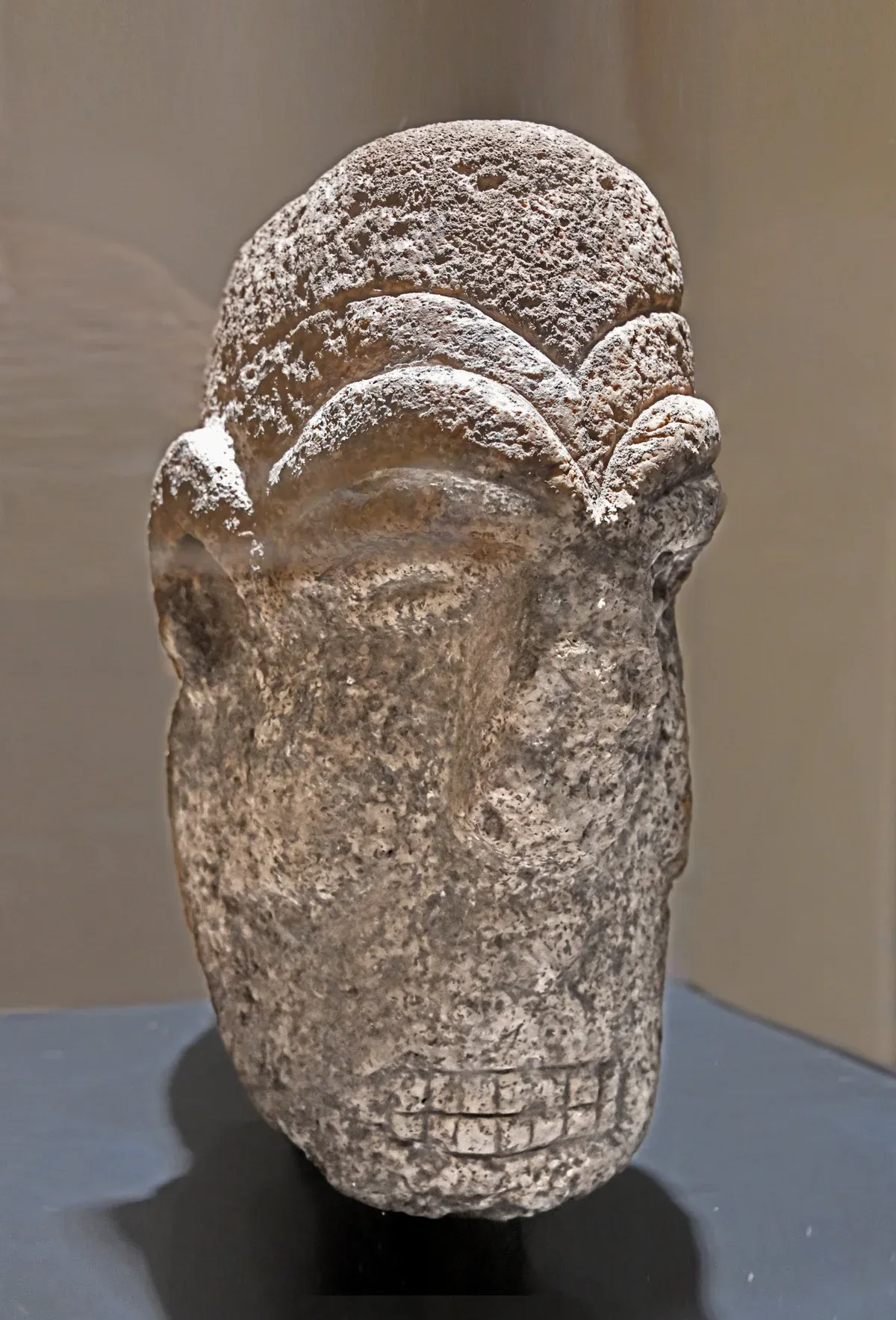
A carved head from Karahan Tepe. Photo: Dosseman, CC BY-SA 4.0, via Wikimedia Commons
Tours That Include Karahan Tepe
Several listings in the catalog put Karahan Tepe on the itinerary. The differences are the start point, the price and whether entry to Karahan Tepe is certain. The Şanlıurfa tours do not include flights, because they start in the city.
Which Listings Cover Karahan Tepe
The table below lists the tours whose site lists name Karahan Tepe, with the card prices in US dollars per person. Read the Karahan Tepe column carefully: one Şanlıurfa day tour marks the stop as not guaranteed, which means you could finish the day without seeing it. Prices are the catalog prices only, not anything an operator quotes on its own website.
Tour Comparison
The figures come from the tour cards on this site. Flights are included only where the listing says so.
| Tour | Price | Starts in | Karahan Tepe |
|---|---|---|---|
| Göbekli Tepe and Karahan Tepe from Istanbul | $900 per person | Your Istanbul hotel | Yes, entrance fees included, flights included |
| Göbekli Tepe and Karahan Tepe Private Day | $1,300 per person | Your Istanbul city center hotel | In the itinerary with admission marked included, non-refundable |
| Göbekli Tepe, Karahan Tepe and Balıklıgöl | $145 per person | Şanlıurfa city center hotel pickup | Entry not guaranteed |
| Göbekli Tepe 2-Day Private Tour | $2,760 per person | Şanlıurfa | In the itinerary, only breakfast named in inclusions |
| Göbekli Tepe 2-Day Private Tour with Flights | $1,659.11 per person | Your Istanbul hotel | In the itinerary, admissions not named in the inclusions list |
| Göbekli Tepe and Mount Nemrut 3 Days | $1,800 per person | Şanlıurfa, pickup included | On the route, entrance fees included, flights not included |
Reading the Inclusions Honestly
Three things trip people up. First, the $145 tour lists Karahan Tepe as not guaranteed, so if the site is your priority, book a listing where it is named as included, such as Göbekli Tepe and Karahan Tepe from Istanbul. Second, the 2-day tours do not all include admission in their inclusions lists: the $2,760 tour names only breakfast, and the $1,659.11 tour leaves admissions out of its inclusions even though the itinerary marks them included.
Third, flights appear only in the Istanbul tours. The Şanlıurfa tours from $145 and the $1,800 three-day trip start in the city, so you arrange your own arrival, as the advice on day trips from Istanbul by plane explains for the flight-based options.
Sources: tour listings on the booking platforms as catalogued on this site
Tips for Visiting Karahan Tepe
Five things worth doing and four to avoid, all drawn from the facts above.
Do
- Do plan on a car, taxi or tour, because per Nomadic Niko there is no stated public transport to Karahan Tepe and the site needs its own vehicle or a private driver from Urfa.
- Do buy or hold a valid Göbekli Tepe ticket, because one visitor reported Karahan Tepe entry at 3 euro or included with that ticket, and the Ministry tariff treats both sites as one Taş Tepeler entry.
- Do visit the Şanlıurfa Archaeology Museum as well, because it holds the Nevalı Çori Temple and a limestone head from the flooded Euphrates site, which completes the Taş Tepeler story.
- Do check the visitor centre status before you go, because a Dünya report had the reception centre still being completed and one visitor found it not operating.
- Do book a tour that names Karahan Tepe in its inclusions, such as Göbekli Tepe and Karahan Tepe from Istanbul at $900, if the site is the reason for your trip.
Don't
- Don't book Göbekli Tepe, Karahan Tepe and Balıklıgöl expecting a certain Karahan Tepe stop, because its listing marks the Karahan Tepe entry as not guaranteed.
- Don't set off in a taxi without agreeing the fare with the driver first, because no reliable fare is published for the trip.
- Don't arrive in summer midday heat unprepared, because the province's summer heat is severe, even though a canopy of about 5,000 square metres shades the excavation.
- Don't expect a built-up attraction like Göbekli Tepe, because about 5% of the site had been excavated as of 2023 and the reception centre was still being finished in the most recent report.
Karahan Tepe: Frequently Asked Questions
When was Karahan Tepe excavated?
Systematic excavations began in September 2019, per the Şanlıurfa municipality, and about 5% of the surface had been excavated as of 2023. The site itself was discovered in 1997 by Bahattin Çelik per Wikipedia, though Hürriyet Daily News says identification came in 2017 surveys. For the older site's story, see the Göbekli Tepe history page.
How far is Karahan Tepe from Şanlıurfa and Göbekli Tepe?
Hürriyet Daily News and Wikipedia put it 46 km from Şanlıurfa city centre, inside Tek Tek Mountains National Park. The distance to Göbekli Tepe is quoted at roughly 35 to 60 km depending on the source and the route. You can see both in one day on a tour such as Göbekli Tepe and Karahan Tepe from Istanbul.
How old is the Karahan Tepe statue?
The 2.3 to 2.45 m seated male statue was found in September 2023, and Wikipedia dates the Karahan Tepe Man type figures to 10,000 to 9,500 BCE. The site itself is dated c. 9750 to 9400 BCE. Ticket costs for visiting are covered in the homepage section on what a tour costs and the site ticket.
Is there a joint ticket for Göbekli Tepe and Karahan Tepe?
Yes. The Ministry's tariff lists 'Göbekli Tepe ve Karahan Tepe Örenyeri (Taş Tepeler)' as one entry at 22 euro for foreign visitors from 1 April, with a combined ticket including the Visualisation Centre at 23 euro. Before that date, secondary sources quote about 20 to 22 EUR. A tour with fees included, like Göbekli Tepe and Karahan Tepe Private Day, has admission at Karahan Tepe marked as included in its itinerary.
What is Taş Tepeler?
Taş Tepeler is the Şanlıurfa Neolithic Research Project, coordinated with the Ministry of Culture and Tourism and sponsored by Turkish Airlines. It covers sites from roughly the 10th to 7th millennium BC, including Karahan Tepe, Sayburç and Sefertepe. The homepage comparison table of Göbekli Tepe tours shows which listings add the Taş Tepeler sites.
Can you visit Karahan Tepe without a tour?
Yes, but per Nomadic Niko you need your own vehicle or a taxi or private driver from Urfa, and the visitor centre was not operating on one recent visit. Entry was reported at 3 euro for foreigners or free with a valid Göbekli Tepe ticket. If you would rather not drive, the Şanlıurfa options in tours from Şanlıurfa start from $145 per person.